
Trade remedies are one of the legal and commercial risks foreign exporters should consider when selling goods to Vietnam. Additional duties or import restrictions may affect supply costs, the competitiveness of export prices and the performance of customer contracts. Assessing this risk requires an understanding of the products covered, the parties involved and the applicable investigation or measure.
Trade remedies in Vietnam address specified forms of injury to domestic industry. Anti-dumping concerns imports sold below normal value; countervailing measures address qualifying subsidies; safeguards respond to increased imports causing or threatening serious injury. Each mechanism requires different evidence. Vietnam’s Law on Foreign Trade Management and its implementing rules provide the principal domestic legal framework. Vietnam must administer its trade-remedy regime consistently with its obligations under the relevant WTO agreements.
For foreign manufacturers and trading companies, assessing this risk also involves identifying the information needed for a response. Relevant records may be held by the manufacturer, trading company or Vietnamese customer. The below explain the regime, participation requirements, commercial consequences and options after a measure is imposed.
Quick Reference
Foreign exporters need to identify the applicable remedy, product coverage and treatment of the producer and exporter before pricing affected sales to Vietnam. Manufacturers and trading companies may need to cooperate on evidence, registration and questionnaires, even where the Vietnamese customer handles import formalities. This overview explains how investigations develop, what duties and restrictions can follow, and when reviews or exemptions may help. The below response plan connects those legal issues with records, deadlines and customer commitments.
Trade Remedies in Vietnam is Within the Global Trading Framework
The World Trade Organization (WTO) framework includes the Anti-Dumping Agreement, the Agreement on Subsidies and Countervailing Measures and the Agreement on Safeguards. These agreements set conditions for the three remedies, including injury findings, evidence and investigation procedures. Importing authorities conduct cases under domestic rules that must be consistent with their WTO obligations. Tariffs introduced in a wider trade-policy dispute may have a different legal basis.
For an exporter serving several markets, restrictions in one destination can redirect sales toward Vietnam and change competitive pressure there. Access to Vietnam therefore needs its own assessment; favorable treatment in another market does not settle the Vietnamese position. Vietnam also applies trade-agreement preferences alongside its trade-remedy framework. A preferential import tariff does not automatically remove a trade-remedy duty.
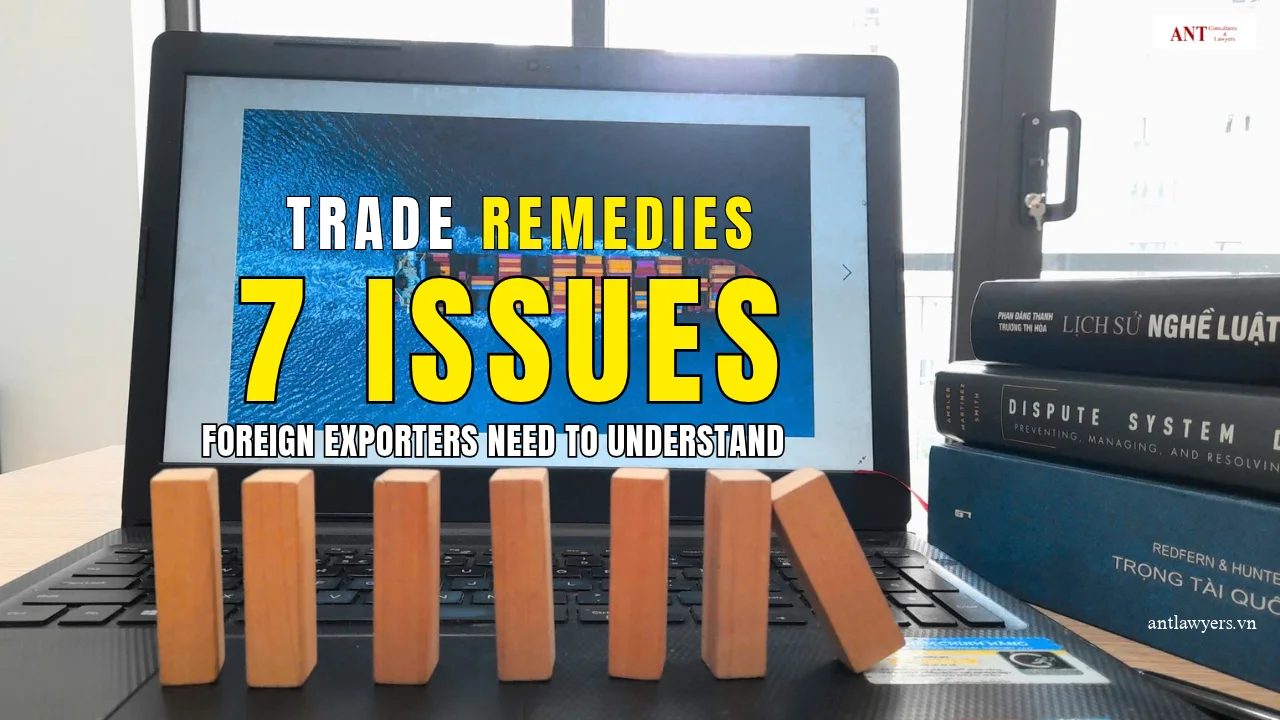
Key Issues of Trade Remedies in Vietnam Foreign Exporters Need to Understand
Vietnam’s Legal Framework Determines Your Export Exposure
Trade remedies respond to the effects of imports on domestic production. Goods that satisfy ordinary market-entry requirements can still face a trade-remedy measure. For an overseas supplier, the first legal task is to compare the actual product and supply chain with the investigation notice or operative decision.
Check the product description, relevant countries, named producers and exporters, exclusions and effective dates. A commercial product name or tariff code alone may not settle coverage. A trading company selling goods from several factories should assess each relevant source instead of assuming that every shipment invoiced under its name receives the same treatment.
The Ministry of Industry and Trade, or MOIT, administers the regime. Its Trade Remedies Authority of Vietnam, commonly called TRAV, conducts investigations, while the Minister makes the relevant decisions. Customs authorities implement collection and border requirements. Your response to TRAV and your customer’s customs preparations need coordination, but one does not replace the other.
A feature of international trade law in Vietnam is that domestic production and Vietnamese ownership are different concepts. A foreign-owned factory producing in Vietnam may form part of the domestic industry. However, a producer that directly imports the investigated goods, or has a qualifying relationship with their exporters or importers, may be excluded. Exporters should assess the industry identified in the case without assuming that foreign-owned producers are outside it. If your group also plans local manufacturing, distinguish that operation’s position from your overseas exports when developing its Vietnam market entry strategy.
The Three Trade Remedies in Vietnam Require Different Legal and Evidentiary Responses
1. Anti-dumping measures
Dumping involves comparing the export price with normal value, usually based on comparable home-market sales in the exporting country. Alternative methods may apply where those sales cannot provide a suitable comparison. A price below a Vietnamese competitor’s price does not, by itself, establish dumping. Manufacturers should expect scrutiny of sales and costs; traders may need to explain purchases, resales and relationships with producers.
Anti-dumping in Vietnam also requires injury and a causal link with dumped imports. The injury test covers material injury, a threat of such injury, or a significant delay in establishing a domestic industry. An exporter’s response can therefore address both the pricing allegation and whether the imports caused the alleged harm. A dumping finding alone does not automatically justify duties.
2. Countervailing measures
Countervailing measures, also called anti-subsidy measures, concern imports benefiting from a subsidy that meets the legal conditions for action. The inquiry examines government or public-body involvement, the financial contribution or qualifying support, benefit and specificity. Specificity concerns support directed to particular enterprises, industries or other qualifying groups. An investment incentive is not automatically countervailable.
The applicable injury and causation findings are also required, using the same broad injury categories as anti-dumping. A manufacturer may need records of support received and the relevant program conditions. A trader cannot answer a producer’s subsidy allegation solely by showing that its resale price was commercially negotiated. Vietnam has used countervailing measures, although its practice is more limited than anti-dumping.
3. Safeguard measures
Safeguard measures in Vietnam concern increased imports, in absolute terms or relative to domestic production, causing or threatening serious injury. Serious injury means a significant overall impairment of the domestic industry, a higher threshold than material injury. Dumping or subsidization need not be established, so showing that your export price is commercially reasonable does not answer the safeguard test.
Ordinary safeguards generally operate across supplying countries, subject to applicable exclusions. They are temporary measures intended to support domestic industry adjustment. Switching factories or export intermediaries may leave the exposure unchanged. Safeguards under particular trade agreements have their own coverage and conditions.
Anti-dumping has played the largest role in Vietnam’s use of trade remedies. That makes exporter participation and pricing records particularly relevant in practice. Nevertheless, the mechanism controls the response: subsidy evidence matters in countervailing cases, while import trends, serious injury and causation matter in safeguards.
Domestic Petitions Define the Allegations Your Business Must Address
A domestic producer or group of producers can petition for an investigation. The applicants must meet the applicable standing and representativeness requirements, supported by evidence about the relevant industry. For a foreign exporter, these requirements help identify whose production and injury allegations form the basis of the case.
A trade remedy petition in Vietnam must identify the goods and provide evidence of the alleged dumping, subsidy or import increase, injury and causal connection. Once accessible through the applicable procedures, the non-confidential petition can help your team assess the product definition, sales allegations and industry evidence. Disagreement with the petition should be supported by records or reasoned analysis.
MOIT assesses the dossier before deciding whether to initiate; initiation without a petition is also possible in specified circumstances with sufficient evidence. Initiation does not establish that the allegations are correct or that a final measure will follow. It does mean that exporters should check registration and response requirements promptly, rather than wait for a duty announcement or a request from a Vietnamese customer.
Participation Requires Coordination Between Manufacturers and Traders
An investigation generally moves from initiation and interested-party participation to questionnaires, evidence examination and verification, preliminary findings where applicable, and a final determination. A provisional measure may apply if its conditions are met. Procedures vary by remedy. Check the notice for registration, submission channels, language and translation requirements, and deadlines before allocating the work.
Foreign producers and exporters can participate under the applicable requirements, including trading companies exporting the investigated goods. Identify the manufacturer, invoicing exporter, related traders and Vietnamese importer accurately. A manufacturer selling through a trader may still need to provide production and cost data. A trader should secure supplier cooperation early; its own invoices cannot replace information held at the factory. The importer’s participation does not automatically establish the overseas entities’ positions.
Confidentiality needs its own plan. Manufacturers may be reluctant to share costs or know-how with trading partners. Establish how sensitive records can be submitted under the investigation’s confidentiality procedures, including required non-confidential versions or summaries. Do not assume that an ordinary confidentiality agreement satisfies those procedures. Where technical records contain protected know-how, intellectual property protection in Vietnam also matters when deciding what to share commercially outside the formal submission.
An anti-dumping investigation may involve sampling of exporters. Respond to sampling requests and check whether your company must complete a detailed questionnaire or supply other information. Incomplete, late or unreliable responses can lead to findings based on available information, potentially affecting duty treatment. Participation also allows relevant comments on disclosed findings and consultation where permitted; it does not guarantee an individual rate or a favorable result.
Reliable Evidence Connects Your Product, Factory and Sales Channels
The relevant evidence depends on the mechanism. Dumping inquiries may examine export sales, home-market sales, production costs, price adjustments and corporate relationships. Subsidy inquiries examine support programs, eligibility, financial terms and benefits. A pure safeguard investigation does not require a dumping-margin calculation. Prepare the requested evidence rather than reuse a response designed for a different remedy.
Manufacturers should connect production and cost records with the investigated products and relevant sales. Traders should connect purchases from each producer with resale invoices, customers and shipments. Explain related-party transactions and differences between accounting and reporting systems. Coordination between the exporter’s finance team and legal advisers helps assign responsibility, reconcile figures and preserve the source records needed for verification.
Product specifications are equally important: composition, grade, dimensions, manufacturing process and use may affect scope and comparisons with Vietnamese goods. Exporters can also submit relevant evidence on demand, prices, import volumes, market share and other causes of industry difficulties. Injury and causation cannot be answered solely through the exporter’s own profitability or its customer’s preference for imported goods.
Measures Affect Pricing, Customer Commitments and Market Access
1. Anti-dumping
Provisional or final duties may apply when the legal conditions are met. An accepted price undertaking may offer an alternative in appropriate circumstances. This requires formal acceptance within the proceeding; simply increasing your selling price does not remove an existing duty.
2. Countervailing
Provisional or final duties address established subsidization. Qualifying commitments concerning subsidies or prices may also be available. Assess the obligations and monitoring before treating a commitment as commercially workable.
3. Safeguards
Permitted measures include additional duties, import quotas, tariff-rate quotas, import licensing and other legally permitted measures, depending on the applicable rules and decision. A tariff-rate quota applies different tariff treatment within and beyond a specified quantity. Under Vietnamese law, a provisional safeguard may take only the form of an additional import duty.
For imports covered by a provisional measure, a higher final duty does not trigger collection of the difference for that provisional period. If the final duty is lower, the difference must be refunded; if no final measure is imposed, provisional duties collected or payment security must be returned. A higher final rate can still apply to later imports. Exporters should coordinate with the importing customer over payment records and any refund, without assuming that a refund belongs to the exporter.
The operative decision controls product coverage, countries, producer or exporter treatment, dates and conditions. Anti-dumping and countervailing rates may differ between companies. Before quoting, confirm that the intended factory and sales channel meet the conditions for the treatment being assumed. The Vietnamese importer generally handles duty payment at the border, but the commercial cost can affect your price or margin. Classification, valuation, declarations and tax calculations require a separate customs assessment.
Additional duties can create contract disputes in Vietnam over prices, delivery or import costs. Review who bears these costs, whether adjustment is permitted and how the parties will handle a later refund. A public-law decision on duties does not determine the private allocation of costs between buyer and seller. Avoid promising a fixed total import cost before the relevant product and company treatment has been checked.
Reviews and Exemptions Can Change Your Continuing Exposure
An existing measure requires continued monitoring. Reviews can change, continue or end it. Anti-dumping and countervailing sunset reviews examine whether expiry would be likely to lead to continued or renewed dumping or subsidization and injury. Safeguard extensions require separate findings, including continued need and industry adjustment. An old expiry date is therefore an unreliable basis for promising duty-free deliveries.
A qualifying new exporter may seek a new-exporter review under anti-dumping or countervailing rules; this is not a general safeguard procedure. Product-scope reviews examine whether coverage should be adjusted, including comparisons with domestically produced goods and the domestic industry’s production capacity. Distinguish a claim that your goods fall outside the measure from a request to exempt goods that are covered.
Exemptions may be available for qualifying imports under anti-dumping, countervailing or safeguard measures, subject to the conditions and an exemption decision. In Vietnam’s manufacturing supply chains, domestic production capability and whether local goods can substitute for imported inputs may be central. An overseas manufacturer can support its Vietnamese customer with technical specifications and evidence of the required characteristics; a trader may need to obtain that evidence from the factory. Confirm who is eligible to apply. Approval may be limited by quantity, period or use and require reporting; customer preference alone is insufficient.
Anti-circumvention procedures address specified changes in products, production or trade arrangements that undermine an existing measure. They are linked to an underlying remedy. A different invoicing company or shipping route does not by itself remove exposure. Before changing your supply arrangements, examine the actual producer, origin and production activities. An anti-circumvention questionnaire may require evidence tracing those arrangements and transactions.
A complaint or court challenge is separate from a review or exemption request. Check standing, deadlines and the effect on current obligations before selecting a route. A pending application should not be treated as permission to disregard an existing decision.
Step-by-Step Response for Foreign Exporters
Assign one person to coordinate legal, finance, production and sales work. The sequence below applies to foreign manufacturers and trading companies, with responsibilities allocated according to who holds the records. Check urgent deadlines immediately while completing the assessment.
Step 1: Map the goods and supply chain
Record specifications, origin, export country, actual factory, invoicing exporter, intermediaries and Vietnamese customers. Separate products or sources that may receive different treatment.
Step 2: Locate the official proceeding or decision
Identify the remedy and stage, including any review or anti-circumvention inquiry. Obtain amendments and compare scope, company conditions and dates with planned shipments.
Step 3: Secure participation and calendar deadlines
Confirm registration, questionnaire, comments and review requirements. Assign a filing owner, allow time for translation, and verify approval of any requested extension.
Step 4: Allocate manufacturer and trader responsibilities
The factory should lead on production, costs and technical data; the trader should organize purchases, resales and the sales chain. Confirm supplier cooperation and arrangements for confidential submissions.
Step 5. Collect and reconcile the evidence
Preserve requested sales, cost, subsidy, production and corporate records. Match submitted figures to source documents and explain gaps before filing.
Step 6: Assess duties and customer commitments
Coordinate with the importer on expected treatment and documentation. Recheck quotations, open orders, cost allocation and refund arrangements before agreeing revised terms.
Step 7: Submit a supported response and track the next stage
Answer the applicable legal test, retain filing receipts, and prepare for supplementary requests, verification and comments on findings. Escalate missing evidence early.
Step 8: Monitor decisions and continuing options
Update shipment assumptions when measures change. Assess eligibility for reviews or exemptions and recheck treatment before changing factories, intermediaries or production arrangements.
If a dispute with a customer or supplier also arises, preserve the contract and complete communications about price changes, delivery and costs. Evidence for contract disputes in Vietnam serves a different purpose from the investigation response, even when both files draw on some of the same records.
Frequently Asked Questions About Trade Remedies in Vietnam
Q1: What is the difference between anti-dumping and countervailing measures in Vietnam?
Anti-dumping examines export pricing against normal value. Countervailing examines a qualifying subsidy, including government involvement, benefit and specificity. Both require the applicable injury and causation findings, but the evidence used to establish dumping differs from the evidence used to establish subsidization.
Q2: What is the difference between anti-dumping and safeguards?
Anti-dumping requires findings of dumping, the applicable injury and a causal link between them. Safeguards address increased imports causing or threatening serious injury without requiring dumping or subsidies. Their coverage, duration and review conditions also differ.
Q3: Can Vietnam impose both anti-dumping and countervailing duties on the same imported product?
Yes, where the separate legal conditions are satisfied. Concurrent duties remain subject to rules against impermissible double remedies, including situations in which the same subsidy would be offset twice. Exporters should check the operative decisions and calculations to establish whether both duties apply to their goods and producer.
Q4: Can a foreign trading company participate without being the manufacturer?
Yes, a trader exporting the investigated goods can participate as an interested party under the applicable requirements. It should identify its role and coordinate with the manufacturer where factory information is needed. Participation alone does not guarantee an individual duty rate, and the Vietnamese customer’s submissions do not automatically cover the trader’s position.
Q5: How can a foreign exporter check whether its goods are covered?
Obtain MOIT and TRAV notices, the operative decision and amendments. Compare product characteristics, origin, producer or exporter, dates and documentary conditions. Read tariff codes alongside the product description and exclusions. Coordinate with the Vietnamese importer to confirm the resulting customs treatment for the intended shipment.
A Practical Next Step
Build a shared response file identifying the goods, manufacturer, exporter, applicable decision and next deadline. Confirm which records your business controls and which require supplier or customer cooperation. That gives management a practical basis for participating in the proceeding, reviewing sales commitments and assessing continuing access to Vietnam.
About the Author
Tuan Nguyen is the Managing Partner and founder of ANT Lawyers, with more than 20 years of experience across legal practice, management and compliance. He advises foreign companies, investors and manufacturers on corporate, commercial, international trade, regulatory and dispute-related matters in Vietnam. He holds an LLB from Hanoi National University School of Law and an MBA from Warwick Business School, and is an Associate Member of the Chartered Institute of Arbitrators.
He is also one of the contributors to the Vietnam chapter of GAR Know-How: Commercial Arbitration in Vietnam.
About ANT Lawyers, a Law Firm in Vietnam
General Disclaimer
This article is for general informational purposes only, does not constitute legal advice, and does not create a lawyer-client relationship. Vietnamese laws, regulations and administrative practice change over time, and the correct position for any matter depends on its specific facts and the rules in force when action is taken. Verify the current position before relying on anything stated here, and consult qualified counsel on your specific situation.
International Trade Law in Vietnam: 12 Decisions for Managing Import and Export Risks

10 Practical Lessons Anti Dumping Law Firms in Vietnam Rely On When Cases Get Serious
Intellectual Property in Vietnam: 7 Decisions Foreign Companies Should Make Before Market Entry
Contract Disputes in Vietnam: 8 Business Risks Foreign Companies Must Control
How ANT Lawyers Could Help Your Business?
You could learn more about ANT Lawyers International Trade and Tax Practice or contact our International Trade Dispute Lawyers for advice via email ant@antlawyers.vn or call our office at (+84) 24 730 86 529