
Buy property in Vietnam as a foreigner only after the legal path matches the commercial deal. Once eligibility is confirmed, the first transaction risk is whether the seller can transfer the property, whether the documents support it, and whether the deposit terms protect the buyer if the deal fails.
The risky point is the deposit. A foreign buyer may pay quickly to secure the unit, then later find that seller-authority, document, title-timing or contract issues were never checked.
To buy property in Vietnam as a foreigner safely, as part of legal checks of real estate in Vietnam for foreigners, first confirm ownership eligibility, then, before paying a deposit, check seller authority, title and project documents, deposit refund terms, the sale contract, tax and fees, the payment route and the exit plan. The deposit should be conditional on these checks, not paid ahead of them.
Quick Reference
The safest way to buy property in Vietnam as a foreigner is to check the transaction before the deposit, not after. With eligibility already confirmed, the buyer should focus on who can sell, what documents prove it, whether the deposit gives a clean exit, and how payment and tax are handled.
What Should Be Confirmed Before The Deposit?
Eligibility should already be confirmed. Whether a buyer in this category can own this property type in this project is answered first as a question of ownership eligibility, in can foreigners buy property in Vietnam.
Why Is The Deposit The Key Control Point?
Because it is usually the first irreversible step. A deposit paid before seller authority, documents and refund terms are checked converts a manageable question into a refund dispute. Conditioning the deposit on the checks below keeps the buyer’s exit clean.
|
Check |
Practical question |
|
Eligibility |
Confirmed as a separate ownership question before this stage? |
|
Seller |
Who has legal authority to sell, now? |
|
Documents |
What proves the property can be transferred? |
|
Title holder |
Will the buyer, spouse or another person hold title? |
|
Deposit |
What happens if a check fails after payment? |
|
Contract |
Do payment, handover, title and refund terms match the risk? |
|
Tax |
Who pays tax and fees, and when? |
|
Payment |
Is the funding and currency route clean? |
|
Exit |
Can the property be sold or transferred later? |
9 Checks Before Paying a Deposit
Confirm Eligibility First, Then Work The Transaction
Before working the transaction, the buyer should confirm that the intended ownership result is legally possible. Whether a foreigner can own this property type in this project, and in which name, is answered in can foreigners buy property in Vietnam, and the full decision path sits in real estate in Vietnam for foreigners.
Assuming the buyer is eligible and now faces a specific seller, specific documents and a deposit request. From here, the buying decision is about authority, evidence, deposit, contract, tax, payment and exit.
Match The Property Type To The Right Checklist
The property type controls which transaction checklist applies. An apartment, landed house, villa, resale unit, off-plan unit and commercial premises do not carry the same documents or timing.
Many foreign buyers start with location and price. That is natural, but the document path differs by asset. A resale apartment, a developer off-plan unit and a landed house each need a different evidence set.
Apartment buyers should use buy apartment in Vietnam as a foreigner, because apartment purchases carry building quota, developer-document and handover risks.
Seller Authority Is The First Transaction Check
A seller with keys is not always a seller who can transfer. The buyer should check the named owner, co-owner, spouse, company representative, developer authority and any mortgage or restriction.
This is where many foreign buyers rely too much on possession. A person may live in the property, manage it, collect rent, or negotiate the deal, but still lack authority to sign a binding transfer.
The buyer should ask for evidence before the deposit. The question is not whether the seller sounds credible. The question is what document proves the seller can transfer this property now.
Decide The Title Holder Before You Pay
If the buyer is considering holding title through a Vietnamese friend or spouse rather than directly, that decision should be made before any payment, not after.
For the transaction, the key point is that the named title holder may control sale, mortgage, transfer and inheritance, and a side agreement may not protect the foreign payer as well as lawful title. The full control, family-property and evidence analysis is in nominee property in Vietnam, and it should be settled before the deposit is paid.
Real Estate Due Diligence Should Happen Before The Deposit
Due diligence means checking the evidence that supports the deal. It is not a formality after the buyer has already committed money.
The buyer should review title evidence, seller identity, project status, mortgage status, tax and fee exposure, handover status, management-fee issues and any restriction on transfer.
Weak due diligence changes negotiating power. If the buyer discovers a problem after paying, the buyer may need to negotiate a refund rather than decide freely. For the full checklist, use real estate due diligence in Vietnam.
Deposit Terms Should Match Legal Conditions
A deposit agreement should protect the buyer if transfer conditions fail. Recording the amount and deadline is not enough.
Useful deposit terms should address seller authority, title evidence, project conditions, mortgage release, refund events, default and dispute evidence. Foreign buyers should be careful with short informal deposit notes; they may be fast, but they may not say what happens if a check fails.
Use real estate deposit agreement before transferring money.
The Sale Contract Should Control Payment And Handover
The sale contract should connect payment, handover, title documents, tax, default and refund terms. A contract that does not control these points leaves the buyer exposed.
Buyers should check whether payment is linked to document delivery and transfer steps, whether handover happens before or after legal transfer, and what happens if the seller delays. A resale apartment, developer sale and off-plan unit should not be treated as the same commercial risk.
For contract-focused checks, use property sale contract in Vietnam.
Tax And Payment Route Can Change The Real Price
Tax, fee and payment rules can change the final economics. The buyer and seller should agree who pays what before signing.
Foreign buyers should also check the payment route. Funds from abroad, foreign-currency conversion, bank-transfer evidence and declared price can affect later proof and tax handling. The safest position is to align the commercial price, contract price, tax responsibility and payment evidence early.
For the tax detail, use real estate tax in Vietnam.
Exit Risk Should Be Checked Before Purchase
A buyer should understand future sale, leasing, inheritance and transfer risk before buying. A property that is easy to buy but hard to sell may not fit the buyer’s real plan.
Exit risk matters for individual buyers who may leave Vietnam, change family plans, or sell to a Vietnamese or foreign buyer later. If the title is under another person’s name, exit risk becomes more serious.
The final buyer question should be: what event would make this property difficult to sell, transfer or recover value from later?
Seller-side steps are covered in selling property in Vietnam.
Step By Step: How To Buy Property In Vietnam As A Foreigner
- Confirm ownership eligibility first, as a separate step before the transaction.
- Match the property type to the right transaction checklist.
- Verify seller authority, title evidence, mortgage status and co-owner consent.
- Settle the title-holder choice before payment.
- Complete due diligence before signing the deposit.
- Make the deposit conditional on the legal checks.
- Review the sale contract for payment, tax, handover, title and refund terms.
- Agree tax responsibility and confirm a clean payment route.
- Check exit risk before final payment.
Common Mistakes Foreign Buyers Make
- The first mistake is paying a deposit before checking whether this seller can actually transfer.
- The second mistake is relying on the seller’s possession instead of seller authority.
- The third mistake is leaving the title-holder choice unsettled until after payment.
- The fourth mistake is treating the sale contract as a standard form.
- The fifth mistake is checking tax and payment route only at the transfer stage.
- The sixth mistake is ignoring exit before entry.
Frequently Asked Questions
Q1: How do I buy property in Vietnam as a foreigner?
First confirm ownership eligibility, then, before any deposit, check seller authority, documents, deposit refund terms, the contract, tax and the payment route. Make the deposit conditional on those checks.
Q2: What should I check before paying a deposit?
Check seller authority, title and project evidence, mortgage status, refund terms and the title-holder structure. The deposit should protect you if any of these fail.
Q3: Do I need to re-check whether foreigners can own the property?
Eligibility is handled first in can foreigners buy property in Vietnam. This page assumes that is already confirmed and focuses on the transaction.
Q4: Can I put the property under a Vietnamese friend or spouse’s name?
That changes who controls the title and raises family-property and evidence risk. Settle it before payment using nominee property in Vietnam.
Q5: What is the safest first step in the transaction?
Confirm seller authority and complete due diligence before the deposit, and make the deposit conditional on those checks.
Conclusion
Before you buy property in Vietnam as a foreigner, confirm eligibility, then check seller authority, due diligence, deposit conditions, contract, tax and payment route together.
About the Author
Tuan Nguyen is the Managing Partner and founder of ANT Lawyers, with more than 20 years of experience across legal practice, management and compliance. He advises foreign companies, investors and manufacturers on corporate, commercial, international trade, regulatory and dispute-related matters in Vietnam. He holds an LLB from Hanoi National University School of Law and an MBA from Warwick Business School, and is an Associate Member of the Chartered Institute of Arbitrators.
About ANT Lawyers, a Law Firm in Vietnam
Founded in 2012, ANT Lawyers is a Vietnam law firm with offices in Hanoi, Ho Chi Minh City and Da Nang. Our real estate lawyers advise on land use rights, property acquisition and leasing, project development and real estate disputes in Vietnam. We combine legal analysis with practical understanding of Vietnam’s regulatory environment and local administrative practice.
General Disclaimer
This article is for general informational purposes only, does not constitute legal advice, and does not create a lawyer-client relationship. Vietnamese laws, regulations and administrative practice change over time, and the correct position for any matter depends on its specific facts and the rules in force when action is taken. Verify the current position before relying on anything stated here, and consult qualified counsel on your specific situation.
Buy Property in Vietnam as a Foreigner: 7 Legal Mistakes That Buyers Must Avoid
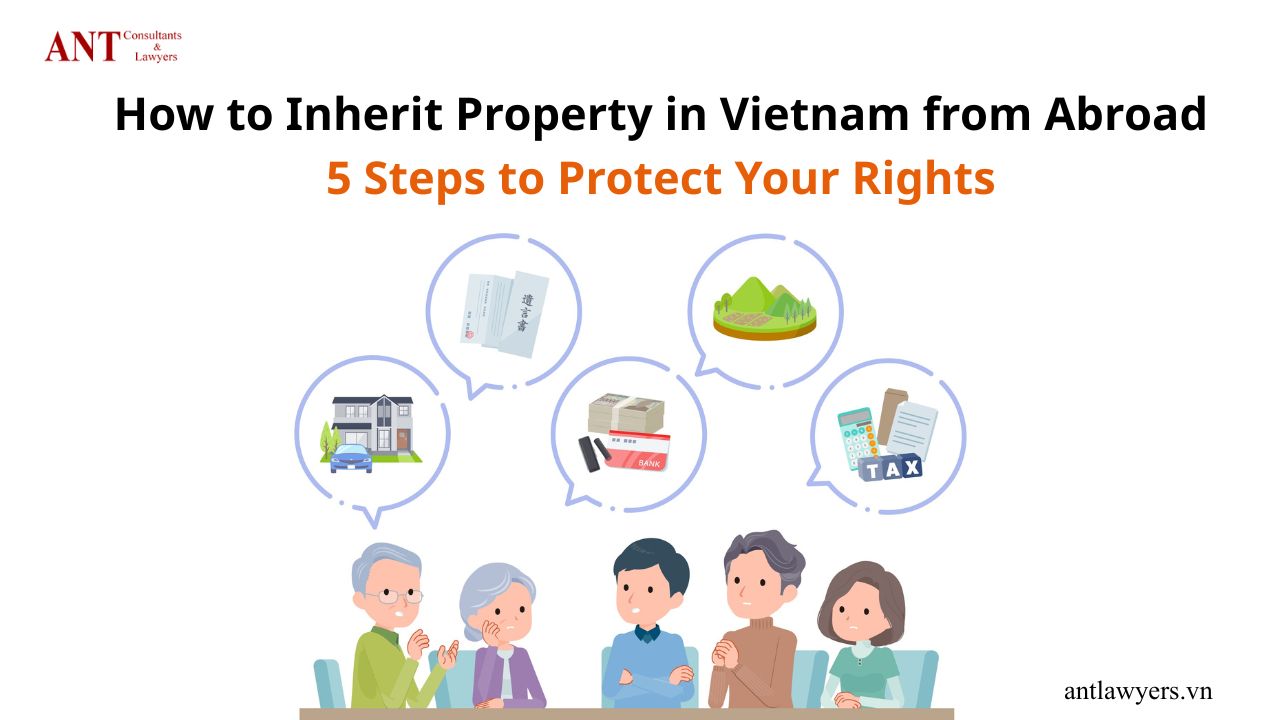
How to Inherit Property in Vietnam from Abroad: 5 Steps to Protect Your Rights

Selling Property in Vietnam: 7 Smart Moves for a Safe and Profitable Exit When You Leave

7 Essential Truths About Real Estate Taxation in Vietnam Every Foreign Investor Must Know Now
How ANT Lawyers Could Help Your Business?
You could reach ANT Lawyers for advice via email ant@antlawyers.vn or call our office at (+84) 24 730 86 529