
A branch office in Vietnam is not a general shortcut for every foreign company. It is available only when the foreign trader, the proposed activity and Vietnam’s market-opening position satisfy the relevant conditions. Its licensed scope must also support the business the parent expects it to perform.
The strategic consequence is direct exposure. A branch remains part of the foreign trader rather than a separate subsidiary. Where the branch contracts or incurs liabilities, the parent stands behind that activity. Management should choose it only where direct parent operation is both legally available and commercially acceptable.
Quick Reference
A branch office in Vietnam is a dependent unit of an eligible foreign trader that may conduct business within its licensed scope. It is not a separate legal entity, and the foreign parent remains responsible for its contracts, employees, tax and liabilities. Availability depends on the parent’s operating history, the exact sector, market-access commitments and specialised law. The branch needs a licensed scope, branch head, lawful premises, supporting parent documents and registration with the current competent authority. After licensing, it must implement tax, accounting, bank, employment and operational controls. A subsidiary is usually safer where the group wants liability separation, local equity funding or a broader multi-activity platform.
Branch Office in Vietnam: 10 Checks on Eligibility, Scope and Parent Liability
What a Branch Is
A branch is an extension of the foreign trader. Unlike a representative office, it may conduct business within the scope stated in its branch licence. Unlike a Vietnamese subsidiary, it does not create a separate company standing between local operations and the parent.
This distinction affects contracts, liability, accounts, tax and management. The branch should consistently identify the foreign trader in its documents and stay within the licensed authority. The parent should treat it as one of its own operating units, with direct governance and risk oversight.
When Does a Branch Office in Vietnam Fit?
A branch can fit where the foreign trader wants to remain the contracting enterprise, the sector permits branch operation and customers are comfortable dealing directly with the parent. It may be relevant where a treaty or specialised framework recognises the branch form for the activity.
It is less attractive where the group wants liability ring-fencing, local investors, equity fundraising, a broad combination of activities or a future sale of the Vietnam business. The decision should be based on the operating and exit model, not an assumption that a branch will always be quicker. Start with the Vietnam Market Entry Strategy before committing to the form.
Foreign-Trader Eligibility
The parent must be lawfully established and satisfy the operating-history, registration-validity and activity conditions under the current framework. Branch eligibility is generally more demanding than the threshold for a representative office.
Review changes in the parent’s name, legal form, registration number, merger history and authorised signatories. The proposed branch scope should also be compatible with the parent’s lawful business. A mismatch can create a licensing problem or narrow the permitted branch activity.
Sector and Treaty Availability
The right to establish a branch is not identical across all sectors. Vietnam’s market-access commitments, domestic law and specialised regulations may permit a branch, impose conditions or reserve the activity to another structure.
Classify the actual service or transaction before recommending the form. If the branch will combine activities, each should be tested. Where the legal basis is uncertain, management should receive a qualified position and alternative structure of market entry access in Vietnam before committing premises or staff.
Permitted Licensed Scope
The branch may perform the business stated in its licence and consistent with the foreign trader’s rights. The scope controls what it may offer, contract and invoice. It does not give blanket authority to perform every activity of the parent worldwide.
The commercial team should compare each product, proposal and customer contract with the licensed scope. If the model expands, review whether the licence, tax registrations, premises or other operating approvals must change before launch. Scope control is a continuing management task.
Parent Responsibility and Contracts
Because the branch is not a separate legal entity, the foreign trader is directly responsible for branch obligations. Customer claims, employment matters, tax liabilities, lease disputes and regulatory issues can reach the parent without a subsidiary liability barrier.
Contracts should correctly name the foreign trader acting through its Vietnam branch and identify the branch head’s authority. Group insurance, dispute clauses, signing limits and parent reporting should reflect the direct exposure. If management expects the Vietnam operation to take substantial commercial or product risk, a subsidiary should be compared carefully.
Branch Head and Authority
The branch head manages the local operation within the licence and the authority granted by the parent. The appointment should address signing limits, bank authority, employment, tax filings, delegation and escalation.
Review any statutory or practical restrictions on concurrent roles and the foreign head’s work-authorisation and immigration position. The parent should also plan absence, replacement and emergency control of records and bank access. A branch with unclear authority can bind the parent in unintended ways or become unable to complete routine filings.
Premises, Documents and Application
The premises must be lawful and suitable for the branch activity. Verify ownership or sublease authority, permitted use, facilities, fit-out, signage and any activity-specific condition before the lease becomes unconditional.
The application normally relies on parent registration and operating evidence, constitutional and authority records, financial or business evidence, the branch-head appointment and identity, and lease documents. Foreign-issued records may require legalisation and Vietnamese translation.
Tax, Staff and Post-Licence Work
Unlike an RO, a branch may conduct licensed revenue activity and therefore needs a full tax and accounting implementation suited to its status. It should establish invoicing, bookkeeping, bank, expense, revenue and remittance controls and confirm how its taxable position interacts with the foreign trader.
Employment, payroll, personal income tax, social insurance and foreign-worker rules apply. The branch also needs corporate-style controls over contracts, data, licences and records, even though it is not incorporated as a Vietnamese company. Specialist tax advice should be obtained for the actual flows.
Branch Versus Subsidiary Decision
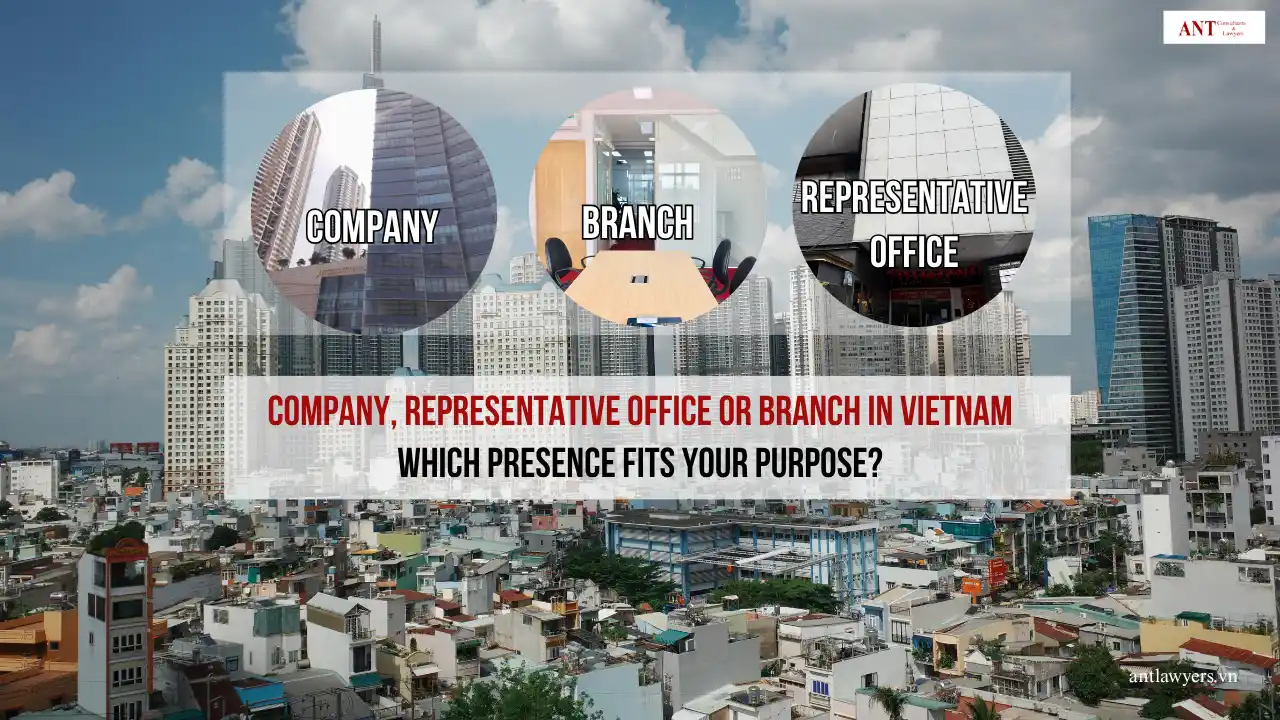
A branch keeps the parent as the operating enterprise. A subsidiary creates a separate Vietnamese company with its own charter capital, governance and liability profile. The branch may offer direct control and commercial continuity but exposes the parent. The subsidiary may be more flexible for ownership, multiple activities, funding and future transactions.
Compare five matters: legal availability, contracting party, liability, funding and exit. If any of these points is unresolved, do not choose the form by perceived filing speed. Vietnam Market Entry Options puts the branch decision in the wider strategy.
Step-by-Step: Establish the Branch
- Define the proposed contracts, revenue activities and operational footprint.
- Test whether the sector and market-access framework permit branch operation.
- Confirm the foreign trader’s history, registration validity and business compatibility.
- Obtain parent approval for direct liability and the intended risk profile.
- Draft the licensed scope and branch-head authority around the commercial model.
- Verify lawful premises and any sector facility condition.
- Collect, legalise and translate parent, head and lease documents as required.
- File with the current competent authority and answer clarification requests.
- Obtain the licence and complete tax, bank, accounting, employment and sector setup.
- Run a launch check against the licensed scope and parent control framework.
Management Risks
The largest risk is assuming a branch limits liability like a subsidiary. It does not. A second risk is relying on a branch form that the sector does not make available. A third is allowing the local business to expand beyond the licensed scope. A fourth is giving the branch head authority that is unclear or poorly supervised.
These risks should be addressed in the parent’s board approval, authority matrix, contract templates and compliance calendar. They should not be left to the licence application alone.
Frequently Asked Questions About Branch Office in Vietnam
Q1: Can every foreign company open a branch in Vietnam?
No. A branch office in Vietnam is available only where the foreign trader, operating history, activity, market-access commitments and specialised rules support it.
Q2: Is the branch a legal entity?
No. It is a dependent unit of the foreign trader. The parent remains responsible for branch activity.
Q3: Can a branch issue invoices and earn revenue?
It may conduct and invoice business only within the licensed scope and after completing the applicable tax and operating requirements.
Q4: Does a branch protect the parent from local liabilities?
No. The absence of separate legal personality means the parent is directly exposed to branch obligations.
Q5: Can the branch hire employees?
Yes, subject to employment, payroll, tax, social-insurance and foreign-worker rules.
Q6: When is a subsidiary safer?
Usually where liability separation, multiple activities, local equity, investment funding or a future sale matters. The answer remains project-specific.
About the Author
Tuan Nguyen is the Managing Partner and founder of ANT Lawyers, with more than 20 years of experience across legal practice, management and compliance. He advises foreign companies, investors and manufacturers on corporate, commercial, international trade, regulatory and dispute-related matters in Vietnam. He holds an LLB from Hanoi National University School of Law and an MBA from Warwick Business School, and is an Associate Member of the Chartered Institute of Arbitrators.
About ANT Lawyers, a Law Firm in Vietnam
Founded in 2012, ANT Lawyers is a Vietnam law firm with offices in Hanoi, Ho Chi Minh City and Da Nang. Our corporate lawyers advise on company formation, investment licensing, M&A and corporate governance in Vietnam. We combine legal analysis with practical understanding of Vietnam’s regulatory environment and local administrative practice.
General Disclaimer
This article is for general informational purposes only, does not constitute legal advice, and does not create a lawyer-client relationship. Vietnamese laws, regulations and administrative practice change over time, and the correct position for any matter depends on its specific facts and the rules in force when action is taken. Verify the current position before relying on anything stated here, and consult qualified counsel on your specific situation.

How ANT Lawyers Could Help Your Business?
You could reach ANT Lawyers for advice via email ant@antlawyers.vn or call our office at (+84) 24 730 86 529