
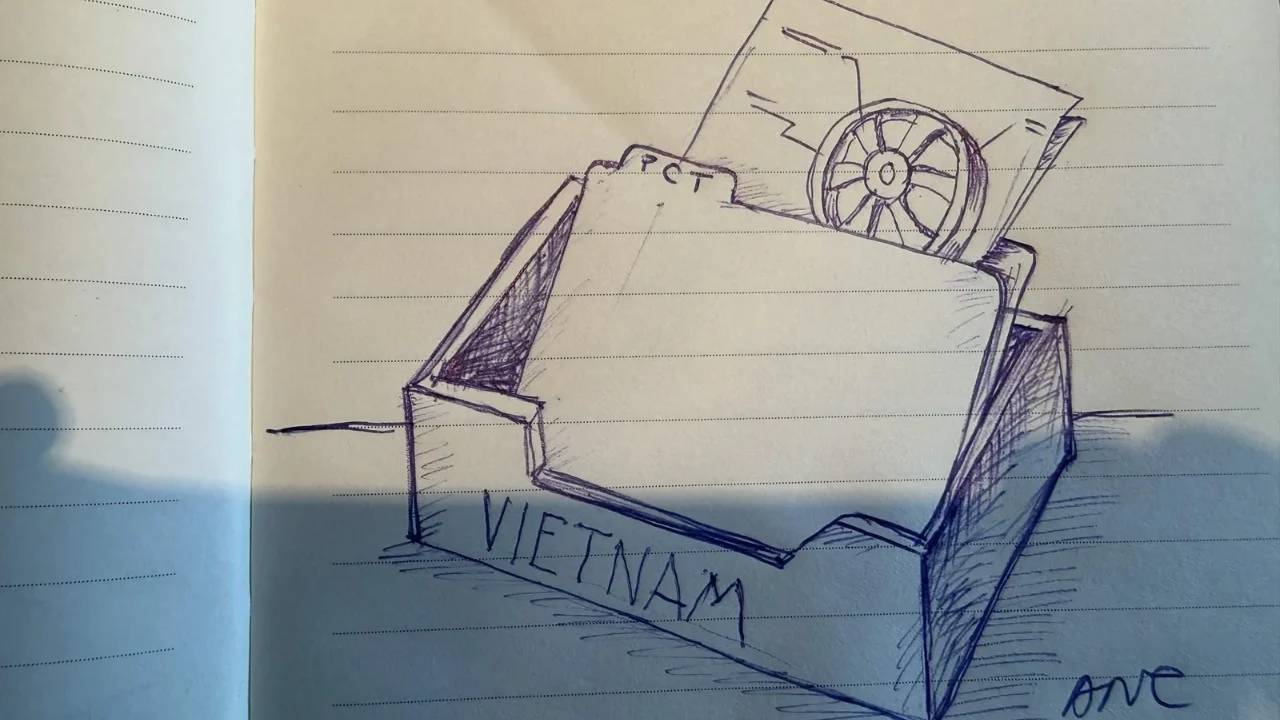
A company with an international patent application must complete a local filing step if it wants to pursue patent protection in Vietnam through that application which is called PCT national phase entry in Vietnam. It brings the application before the Intellectual Property Office of Vietnam (IP Vietnam), for examination under Vietnamese law.
The Patent Cooperation Treaty, or PCT, helps applicants seek protection in several countries through a common international filing procedure. It gives a business more time to assess markets and the invention’s prospects before committing to national filings and their costs. It does not grant a worldwide patent. Each national or regional patent office decides whether protection can be granted within its territory.
For a business considering Vietnam, the company needs to decide which protection is worth pursuing, prepare the Vietnamese technical text and arrange the local filing and examination. These decisions should fit its wider plan for intellectual property in Vietnam, including who will own the rights, pay the costs and manage the application after filing.
Quick Reference
An existing PCT application can be continued in Vietnam as an application for an invention patent or a utility solution patent. The ordinary entry deadline is 31 months from the earliest claimed priority date, or from the international filing date if no priority is claimed. Missing that deadline causes the application to lose its effect in Vietnam, subject to limited possibilities for reinstatement.
A foreign company without a production or business establishment in Vietnam must use a qualified local IP representative. Prepare the Vietnamese technical documents, confirm the applicant’s identity and ownership, and arrange the power of attorney and required fees. Give a clear instruction on whether examination should be requested at entry. If it will be requested later, obtain the exact deadline and assign someone to give that instruction. After filing, obtain the filing report and agree who will manage official notices. Entry starts the local process; it does not guarantee a patent.
PCT National Phase Entry in Vietnam: 7 Checks Before Filing
Choose Protection that Fits the Business
National phase entry continues an existing PCT application. Vietnam is included automatically among the states designated when a PCT application is filed. The local filing still needs to be completed on time; automatic designation does not create an automatic Vietnamese patent.
The commercial question is whether the invention matters to the company’s activities in Vietnam. Those activities may include manufacturing, importing products into Vietnam or licensing technology to a local partner. The decision needs to connect the protection sought with those activities, rather than treating Vietnam as one more country on a filing list. An international search report can help assess the application, but a favorable result does not bind IP Vietnam or establish that a product is free from other parties’ patent rights.
Vietnamese law recognizes two forms of patent protection for inventions. An invention patent requires novelty, inventive step and industrial applicability. In plain terms, the invention must be new, involve a sufficient inventive advance and be capable of industrial application.
A utility solution patent is the other form. It does not apply the same inventive step requirement, but the invention must still be new, capable of industrial application and not merely common knowledge. This option is available when entering Vietnam through the PCT route. The representative should assess whether it fits the invention and the business’s needs; it is not granted automatically when an invention patent faces difficulty.
The choice also affects the available term. An invention patent can last up to 20 years, while a utility solution patent can last up to 10 years, subject to maintenance requirements. For a PCT application, both periods run from the international filing date, not from Vietnamese entry or grant. Time already spent in the international phase therefore matters when comparing the likely value and cost of protection.
Conversion between the two forms is possible during processing, subject to procedural conditions. Discuss the choice before entry so that the filing reflects the business’s needs from the start. If a later conversion becomes necessary, the representative will need to check the stage of the application and the required steps.
The wider launch plan should also address the product’s brand. A PCT filing concerns the invention and does not register its name or logo as a trademark. A trademark search in Vietnam helps assess the proposed brand before further spending, while trademark registration in Vietnam is a separate process for seeking registered protection. Coordinate these decisions with the patent work so that the technology and the brand each receive attention.
Calculate the Entry Deadline from the Right Date
The WIPO national phase requirements for Vietnam confirm the ordinary entry period of 31 months. It runs from the earliest claimed priority date, usually the date of the earlier application on which the priority claim is based. If no priority is claimed, it runs from the international filing date. The international publication date is not the starting point, and sending instructions to a Vietnamese representative does not stop the clock.
You can ask the representative to check the international application number and priority record, then confirm the Vietnamese deadline in writing. Keep the priority date, international filing date and national phase entry date as separate entries in the company’s records. Confusing these dates can affect both filing instructions and later portfolio decisions.
The company also needs an earlier internal deadline. Translation, technical review, signatures and payment arrangements take time, especially when several offices are involved. Agree when the representative needs complete instructions and when the technical team must approve the translation. This gives the team time to correct a problem before the legal deadline arrives.
If the entry deadline is missed, the application loses its effect in Vietnam unless relief is available. It is important to seek advice immediately about reinstatement. Vietnam provides a route to request it in qualifying circumstances, but it is not a routine extension. The reason for the delay, available evidence and time remaining to seek relief all need to be checked before anyone can assess whether the application can be restored.
Confirm the Applicant and Appoint the Right Representative
The applicant must be entitled to seek the patent. That applicant may be different from the company paying the invoice or the overseas firm sending instructions. A group restructuring, company name change or transfer of the invention needs to be reflected correctly in the patent documents; changing the billing details alone does not update the application.
Before filing, compare the applicant’s legal name and address with the PCT record. If the proposed applicant is different, give the representative the documents showing the transfer or succession and explain which changes have already been recorded internationally. This allows the representative to identify the correct filing steps instead of trying to resolve an unexplained mismatch near the deadline.
Keep signed transfer agreements, approval records and related correspondence together, including original files and complete email chains where available. These records help explain how the applicant acquired the rights. They may also become evidence for contract disputes in Vietnam if a transfer or development agreement is later contested. Organizing the file before entry helps the business identify missing documents while the people involved can still explain them.
A foreign company without a production or business establishment in Vietnam must appoint a qualified Vietnamese IP agent. The appointment must be through an organization legally entitled to provide industrial property representation services. Confirm that the firm and the practitioner handling the filing are qualified for patent work. A distributor or commercial contact does not become a qualified representative simply by agreeing to help.
Foreign individuals who do not permanently reside in Vietnam are also subject to the local representation requirement. Applicants with a Vietnamese presence should have their position checked, because the rules distinguish between different types of applicant and establishment.
The appointment requires written authorization, commonly called a Power of Attorney. It should identify both parties, the scope and duration of the authority, the date and the applicant’s signature, with a seal if any. Ask the representative for the correct signing instructions and confirm whether the authority covers examination and receipt of later notices. Notarization should not be assumed to be a general requirement for every patent filing authorization.
Give the Vietnamese Translation a Proper Technical Review
The local filing requires Vietnamese technical documents, including the description, claims, abstract and relevant text in the drawings. If the international application was amended, the filing team must identify the original and amended material, together with the required explanations. Starting from the wrong version can create problems even when the translation itself is accurate.
Claims are the numbered statements that define the protection being requested. Their meaning depends on technical detail. A missing limitation, an incorrect unit or an inconsistent term can change what the text says. A translation that sounds fluent is therefore not enough, and machine-translated claims should not be accepted without a proper technical and legal review.
This review works best when a technical contact is available to explain how the invention works. Where a term has more than one possible Vietnamese rendering, the translator and patent adviser need to settle the meaning and use it consistently throughout the document. The same review should check claim dependencies, drawing references and the relationship between the claims and description. Keep an approved final version so that the business knows what was filed.
Corrections must remain within what the international application originally disclosed. National phase entry is not an opportunity to insert a later improvement into the original filing. Separate unpublished know-how also needs care when it is shared with translators or advisers. A suitable Non-Disclosure Agreement (NDA) can support confidentiality arrangements, but cannot make information secret again after publication.
Complete the Entry Documents and Distinguish What Can Follow Later
The entry package includes the Vietnamese application form, the required Vietnamese technical text and the relevant fees. The representative also needs the applicant’s and inventors’ details, the priority information and clear instructions on the type of protection sought. If entry is requested before international publication, a copy of the international application is required as well.
Vietnam allows certain supporting documents to follow within a separate submission period. These include the Power of Attorney and any document transferring the right to apply during the international phase. If either is not ready, ask the representative to confirm whether it can follow and record its exact due date. This allowance does not extend the entry deadline for the required Vietnamese translation or entry fees.
Provide the signed authorization and transfer documents with the initial instructions where possible. If a document will follow later, name the person responsible for supplying it and ask for confirmation when it has been filed. Priority documents and any required translations need their own check; the same later submission allowance does not automatically apply to them.
The cost approval also needs to be clear. Ask for official charges to be separated from translation and professional fees, and check whether the quote includes the examination request. Later responses to objections, amendments and grant work may be charged separately. Paying the adviser is not itself confirmation that the required official payment has been made, so obtain the filing acknowledgment and payment record for the company’s file.
Give a Clear Instruction to Request Examination
Substantive examination is the review of whether the invention meets the conditions for protection. National phase entry does not, by itself, amount to a request for this review. A separate request and the relevant fee are required, even if another patent office has already examined the invention.
The business should decide before entry whether to request examination at the same time or give a later instruction. Requesting it at entry can reduce the risk of a separate deadline being overlooked. Confirm that the instruction and fee are included in the agreed work, then ask the representative to report whether the request was actually filed.
If examination will be requested later, obtain the exact calendar deadline in writing. The period depends on the type of protection and the rules applicable to the application’s filing history. It is calculated from the filing date or qualifying priority date, rather than starting afresh at national phase entry. The overseas adviser, Vietnamese representative and company contact need to agree who will give the instruction and arrange payment.
This is a deadline to act, not an estimate of how long IP Vietnam will take to examine the application. If no valid examination request is made within the applicable period, the application is treated as withdrawn. Keep this responsibility assigned even while the team is considering claim changes or foreign examination results as part of patent prosecution in Vietnam after entry.
Plan for the Work After Filing
A useful filing report shows the Vietnamese application number, applicant, relevant dates, claim version and payment status. It also confirms whether examination has been requested and identifies any outstanding documents. A filing receipt shows that the application was filed. It does not mean that a patent will be granted.
Submitting entry documents early does not automatically start early national processing. If earlier progress matters to the business, discuss an express request for early processing with the representative. Confirm how that request fits with the instruction to seek examination.
The legal period for examination covers only part of the process and should not be treated as a promised grant date. IP Vietnam may raise objections that require technical explanations or amendments. Time spent preparing those responses can affect the overall schedule. If faster examination is important, ask whether the application qualifies for an available procedure and what further steps it requires.
The process can take several years from the original filing, including time before examination is requested. Ask the representative to separate time already spent in the international phase from the work still expected in Vietnam. Objections and technical responses can affect the forecast, so a commercial launch plan should not depend on an unconfirmed grant date.
Official correspondence is in Vietnamese and, for a represented applicant, is handled through the appointed representative. Agree who will explain each notice, approve the response and provide technical answers. Keep those contacts current when staff or advisers change. At grant, assign responsibility for annual maintenance, including monitoring fees and obtaining the owner’s payment approval.
Step by Step Filing Preparation
The company can organize the following work internally with its overseas adviser and Vietnamese representative. Where local representation is legally required, the representative handles the filing before IP Vietnam.
Step 1: Send the complete international file
Provide the PCT application number, priority details, published application, amendments and available search or examination reports. Ask the Vietnamese representative to confirm the entry deadline and the date by which complete instructions are needed. Identify any missing material immediately.
Step 2: Confirm the applicant and signing authority
Check the applicant’s name against the international record. Supply documents explaining a transfer, restructuring or name change, and identify the person authorized to sign the power of attorney. Appoint a company contact who can obtain commercial and technical approvals.
Step 3: Approve the Vietnamese filing package
Agree whether to seek an invention patent or a utility solution patent. Arrange technical review of the Vietnamese description and claims, resolve terminology questions and retain the approved version. Approve a budget that identifies the entry work, examination request and likely later charges.
Step 4: Give written filing and examination instructions
Authorize filing before the confirmed entry deadline. State expressly whether examination should be requested at the same time. If it will follow later, record its exact deadline, the person responsible and the payment arrangements. Identify any supporting documents permitted to follow separately.
Step 5: Check the filing report and hand over the next tasks
Obtain the filing acknowledgment, application number, filed technical text and confirmation of the relevant payments. Check the examination-request status and each outstanding document’s due date. Agree who will explain official notices, obtain technical answers and approve responses so that the application continues to be managed after entry.
Frequently Asked Questions About PCT National Phase Entry in Vietnam
Q1: Can a foreign company own the patent without a Vietnamese subsidiary?
Yes, a foreign company can be the applicant and owner if it is entitled to the invention and meets the protection requirements. It does not need to transfer the application to a distributor merely to arrange a local filing. Ownership and local representation are separate matters.
Q2: Do we need a foreign patent grant before entering Vietnam?
No. A foreign grant is not a general condition for national phase entry. Waiting for another office to finish examination can cause the Vietnamese deadline to be missed. Foreign examination results can be considered later, without postponing a timely entry.
Q3: Can the company change its Vietnamese representative after entry?
Yes. The change needs a written declaration and suitable authorization for the new representative. Arrange a complete transfer of the file, notices and deadlines. A change of representative should not be treated as a pause in the application process.
Conclusion
Before proceeding with the PCT National Phase entry in Vietnam, it is important to check with the IP representative for the confirmation of the applicant, the approved technical documents, the entry deadline and the examination instruction. Resolve any ownership or translation question while there is still time to correct the filing package. If the deadline is close, identify which work must be completed immediately and which supporting documents can lawfully follow.
After filing, keep the matter open on the company’s internal task list until the filing report has been checked and the next actions have named owners. Give the responsible person access to the approved documents, budget and technical team. This makes it easier to respond to IP Vietnam and to assess whether continuing the application remains worthwhile for the business.
About the Author
Tuan Nguyen is the Managing Partner and founder of ANT Lawyers, with more than 20 years of experience across legal practice, management and compliance. He advises foreign companies, investors and manufacturers on corporate, commercial, international trade, regulatory and dispute-related matters in Vietnam. He holds an LLB from Hanoi National University School of Law and an MBA from Warwick Business School, and is an Associate Member of the Chartered Institute of Arbitrators.
About ANT Lawyers, a Law Firm in Vietnam
Founded in 2012, ANT Lawyers is a Vietnam law firm with offices in Hanoi, Ho Chi Minh City and Da Nang. Our intellectual property lawyers advise on trademark filing and opposition, enforcement and licensing in Vietnam. We combine legal analysis with practical understanding of Vietnam’s regulatory environment and local administrative practice.
General Disclaimer
This article is for general informational purposes only, does not constitute legal advice, and does not create a lawyer-client relationship. Vietnamese laws, regulations and administrative practice change over time, and the correct position for any matter depends on its specific facts and the rules in force when action is taken. Verify the current position before relying on anything stated here, and consult qualified counsel on your specific situation.


How ANT Lawyers Could Help Your Business?
You could learn more about ANT Lawyers IP Practice or contact our IP Attorneys for advice via email ant@antlawyers.vn or call our office at (+84) 24 730 86 529