
Before committing to an investment in a free trade zone (FTZ), a foreign investor needs to know which activities the company may carry out, which approvals it needs, and when customs benefits apply. Free trade zones in Vietnam under Decree 378/2026 offer a legal framework for these decisions, subject to the rules for the zone, company, and project.
The decree, issued and effective on October 1, 2026, sets out procedures under the Urban Development Law. The main legal issues concern company registration, permitted business activities, customs treatment, incentive eligibility, and the rights and obligations agreed with the developer or operator.
Quick Reference: Why the Rules Have Changed
Vietnam has FTZs established under special National Assembly policies. The Urban Development Law and Decree 378 set out a broader framework for creating FTZs and applying their policies. The specified customs and priority procedures apply nationwide, including to existing FTZs. Investors should also review the policies and establishment decision governing their chosen zone.
The decree explains how qualifying areas obtain non-tariff treatment and how businesses apply for customs priority without the normal turnover test. It also implements the law’s company-setup provisions. Registering a company before obtaining an investment registration certificate is already possible under the general Investment Law; the FTZ provision additionally removes the need for an investment project at that setup stage.
For an investor, reviewing the legal conditions for operating in an FTZ is part of its Vietnam market entry strategy. Importing, manufacturing, and regional distribution also bring requirements under international trade law in Vietnam. The investor should identify the permitted business activities, customs obligations, and parties legally responsible for each transaction.
7 Legal Issues for Free Trade Zones in Vietnam under Decree 378/2026
Site Approvals Determine Permitted Use
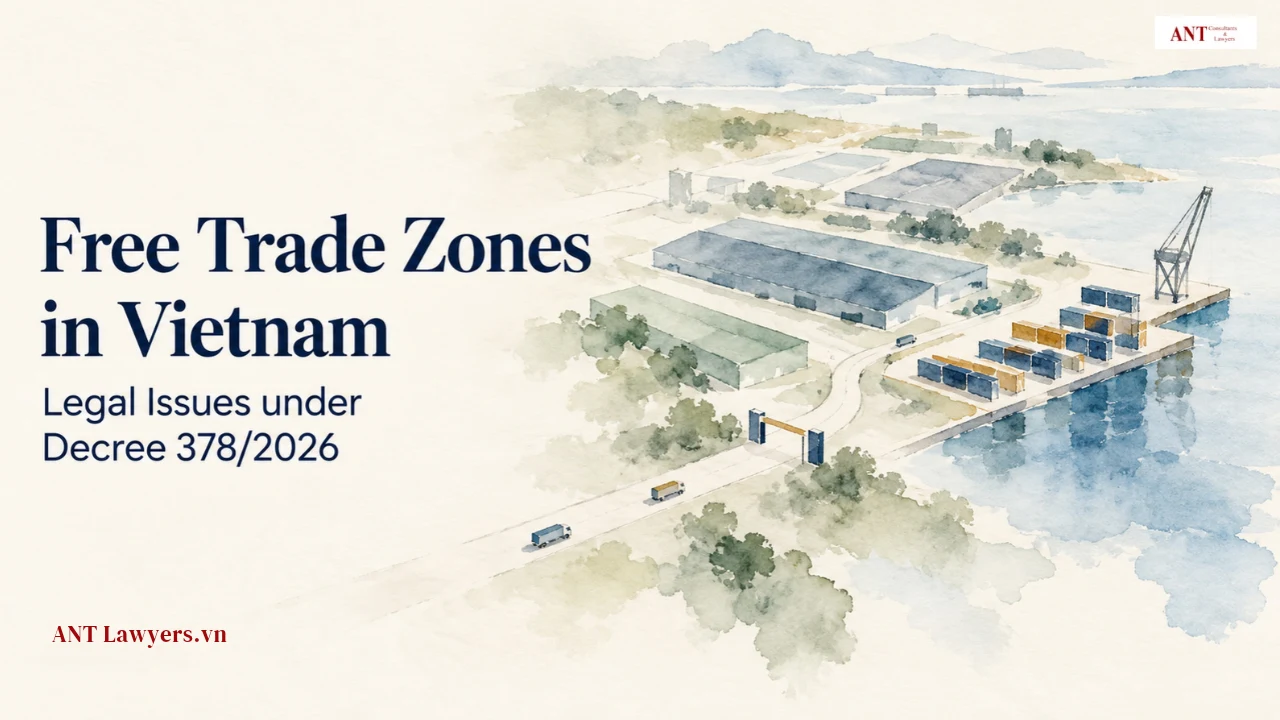
An FTZ can combine industrial, logistics, commercial, research, and technology areas. The approved plan identifies where each activity belongs. The investor needs to confirm that the chosen plot or building is approved for its activities and has the facilities needed for its production or delivery schedule.
The legal review should cover the premises, the rights offered under the lease, and the developer’s obligations for shared infrastructure. Check how access, utilities, waste treatment, and customs arrangements are addressed in the approvals and contracts.
Request the zone’s establishment decision, boundary plan, permitted-use documents, and documents supporting the developer’s right to lease the premises. Reviewing these before paying a deposit is part of a Vietnam company location strategy that takes account of legal requirements.
Company Setup Can Come Before the Investment Project
The Urban Development Law allows a foreign investor to set up a company in an FTZ without a prior investment registration certificate or an investment project for that step. Decree 378 applies this policy to zones formed under its framework. The general Investment Law already permits company registration before investment registration, so investors should compare the requirements for their actual project before estimating any time saving.
The company must still meet foreign-investment conditions for its business and obtain the permissions needed to operate. Factory construction, trading, and logistics services can require different approvals. Separating registration from the project can help an investor organize the business while assessing premises. It still needs to confirm which permissions must be in place before construction, trading, or production begins.
The law also permits foreign investors in FTZs and integrated logistics zones to conduct merchanting trade and temporary import for re-export. Merchanting means buying goods from one foreign market for resale to another without completing Vietnamese import and export procedures.
Under general foreign-trade rules, a foreign-invested company normally conducts merchanting by sending goods directly from one foreign country to another, without crossing Vietnamese border gates. The special FTZ rules allow permitted merchanting transactions to pass through Vietnam under customs control. This gives the company more flexibility in arranging regional shipments. It must still obtain any merchanting license required and meet the conditions for the goods and transaction.
The company’s permitted activities and contracts should reflect whether it buys and resells goods, stores them for customers, or supplies Vietnam’s domestic market.
Non-Tariff Treatment Starts After Customs Confirmation
In an FTZ, non-tariff treatment applies to areas that meet physical and digital customs-control conditions, pass an inspection, and receive confirmation. Other parts of an FTZ follow ordinary customs rules.
For a confirmed non-tariff area, the decree provides simplified declarations for movements to and from foreign markets. Movements within the same area generally need no customs procedure, although some transfers and ownership changes still require notification. Customs continues to supervise the goods and check company records.
Goods supplied from a confirmed non-tariff area to customers in Vietnam’s domestic market are treated as imports. The parties need to agree who acts as importer, handles customs clearance and product requirements, and pays any taxes due. For overseas sales, the destination country’s import-duty and origin rules need separate review.
The customs review should address product classification, customs value, origin, and supporting records under customs law in Vietnam. The applicable treatment depends on how the goods move, including whether they enter the domestic market from a non-tariff area.
Contracts should identify who declares, holds, and releases the goods at each stage. The wider rules on transport and logistics in Vietnam also apply when goods move between the port, the zone, and the customer.
Customs Priority Requires Recognition and Continued Compliance
Recognized businesses generally receive exemptions from routine document and physical inspections. Customs can still inspect where it suspects a violation or selects a shipment for a random compliance check. For a manufacturer with frequent shipments, fewer routine checks can help delivery planning.
Ordinary eligibility rules include turnover requirements, with different conditions and exemptions for different categories of business.
Qualifying FTZ businesses can apply without meeting the turnover test. A business operating for less than two years is assessed over its actual operating period. A new or smaller business can therefore apply without waiting to build up the usual turnover history.
Customs still checks compliance, financial records, internal controls, and cargo and information security before recognizing the business. The treatment covers qualifying zone movements through the customs unit managing the zone. Continued recognition depends on maintaining the conditions. Finance, warehouse, and customs teams should therefore prepare the supporting records together.
Incentives Depend on the Project and Who Qualifies
Check the legal basis for each tax or land incentive: who qualifies, which activities it covers, when it starts, and how long it lasts. The zone’s promotional material should be checked against the legislation, project approvals, and conditions attached to the benefit.
The decree addresses land and water-surface rent incentives for infrastructure development and operation projects. A tenant’s rent is governed by its lease; an incentive received by the developer does not itself reduce that rent.
An existing project brought within a zone may qualify for new or higher incentives for the remaining eligible period. Its previous approvals and incentive history will affect the result. Confirm the project’s legal entitlement and remaining eligible period before relying on the incentive.
Data and Record-Keeping Duties Continue During Operations
Businesses must keep records and provide data on goods received, used, and dispatched. The operator maintains shared customs infrastructure, including controlled gates, cameras, and connected systems. The company’s stock records need to match the goods and the information supplied to Customs.
If data is wrong or late, Customs may lower the company’s compliance rating and check it more closely. The decree provides corrective procedures. Unresolved failures in the zone’s customs conditions can eventually interrupt goods movements or affect non-tariff treatment.
Internal procedures should assign responsibility for detecting and reporting problems, correcting records, and working with the operator and Customs. The procedures should also address system interruptions and the records needed to show compliance.
Lease Terms Define the Parties’ Rights and Obligations
The lease and service agreements should state what the developer or operator must deliver and by when. This includes lawful use of the premises, shared infrastructure, support for approvals, and maintenance of customs systems.
Agree the condition of the premises at handover, service standards, and responsibility for maintenance or upgrades. If the business depends on work being completed, consider linking payment or handover to evidence of completion. The contract should also address deposits, service interruptions, delays, termination, and relocation, particularly where machinery orders or customer commitments depend on the agreed schedule.
Keep approved plans, written promises, handover records, notices, and cost records. They provide evidence for contract disputes in Vietnam if the developer fails to deliver. If a dispute arises, review the notice requirements and available remedies promptly, alongside the immediate steps needed to protect production.
Frequently Asked Questions About Free Trade Zones in Vietnam under Decree 378/2026
Q1: Does every FTZ follow the same legal framework?
The decree’s specified customs and priority procedures apply nationwide, including to existing FTZs. A zone may also operate under special policies and its own establishment decision. Those rules need to be reviewed together to identify the conditions and incentives that apply.
Q2: Can an FTZ business sell to customers elsewhere in Vietnam?
Yes, if its permitted activities and the rules for the goods allow the sale. Goods supplied from the non-tariff area into the domestic market are imports. Agree who handles clearance and any taxes before setting the delivery terms and price.
Q3: Do industrial clusters use the same legal framework as FTZs?
No. The rules for industrial clusters under Decree 303 form a separate legal framework. A company should check the approvals, incentives, and customs treatment for its chosen location; FTZ policies cannot be assumed to apply to an industrial cluster.
Conclusion
For investors considering free trade zones in Vietnam under Decree 378/2026, legal due diligence should connect the zone’s rules with the company’s proposed activities. Confirm the required approvals, customs treatment, incentive eligibility, and contractual rights before signing or paying a deposit. Use the findings to agree clear contract terms and identify the permissions needed before operations begin.
About the Author
How ANT Lawyers Could Help Your Business?
You could reach ANT Lawyers for advice via email ant@antlawyers.vn or call our office at (+84) 24 730 86 529